

10 Years of Sinus & Migraine – And the Magic Ayurvedic Drop That Changed My Life
in Ayurvedic Articles on August 13, 2025For ten long years, my life was a cycle of sinus blockages and relentless migraines. Mornings began with a heavy head, afternoons brought a dull ache behind my eyes, and nights often ended with me pressing a cold cloth to my forehead, wishing the pain away. I had tried almost everything, from steam inhalations, antibiotics, nasal sprays to expensive consultations but relief was always temporary.
Everything changed during a visit to Arunachal Pradesh, where I had the honor of meeting Padma Shri awardee Yanung Jamoh Lego, a respected guardian of tribal and Ayurvedic herbal knowledge. Her warm smile and gentle voice carried the calm of someone who has healed hundreds through plants and nature.
As we sat in her garden, surrounded by medicinal herbs I had never seen before, she noticed me rubbing my temples. “You have sinus and headache issues?” she asked softly. I nodded, a little surprised at her observation. She led me to a corner where a small, unassuming plant grew, its white flowers like tiny stars.
“This is Thumba,” she said, “known in Ayurveda as Leucas aspera. For generations, we have used its fresh juice to clear blocked sinuses and relieve migraines. Three drops in each nostril and that’s all it takes. But it must be done with care.”
That evening, she prepared the drops herself – fresh leaves crushed, juice filtered, gently warmed. She tilted my head back and placed three drops into each nostril. At first, there was a mild tingling, then a wave of warmth spread through my forehead and nasal passages. Within minutes, I felt something shift. The pressure in my head began to ease, my nose cleared, and for the first time in years, I could take a full, deep breath without pain.
Over the next few days, I continued the treatment under her guidance. By the end of the week, I realized something extraordinary because I had not experienced a single migraine attack. My sinus congestion was gone, my head felt light, and my energy had returned.
Today, Thumba has a permanent place in my home. Every time I use its magic Ayurvedic drops, I remember that quiet garden, the kindness of Yanung Jamoh Lego, and the healing power of nature that modern life often overlooks. After ten years of struggle, a humble wildflower taught me that sometimes, the most powerful remedies are hidden in plain sight.
Introduction to Leucas aspera (Thumba/Guma/Dronapushpi)
In the lush fields and quiet corners of rural India, there grows a small, humble plant with white, star-like flowers called Leucas aspera. Known in different regions as Thumba, Guma, or in Sanskrit as Dronapushpi, this plant has been cherished in Ayurveda for centuries. While it may appear modest in size, its healing energy is anything but ordinary.
In the Ayurvedic tradition, Leucas aspera is celebrated for its Kapha- and Vata-balancing properties. Its bitter (Tikta) and pungent (Katu) tastes, combined with its light (Laghu) and dry (Ruksha) qualities, give it a warming (Ushna Virya) potency. These qualities make it especially effective in clearing excess mucus, relieving respiratory congestion, and stimulating circulation in the head and nasal passages.
Beyond its role in easing coughs and fevers, Ayurvedic healers have long used its fresh juice, decoctions, and poultices for conditions ranging from headaches and sinus blockages to insect bites and skin infections. It is this very plant growing wild in courtyards, temple gardens, and even roadside fields, that has offered relief to countless people through simple, natural remedies.
What makes Leucas aspera truly special is its dual role: it is both a household first-aid herb and a powerful therapeutic plant in the hands of skilled healers. Among its many applications, one stands out for sinus and migraine sufferers – the use of its freshly extracted juice as warm nasal drops (Nasya). This traditional therapy, when applied correctly, can offer almost immediate relief from years of stubborn congestion and headache.
About the Plant
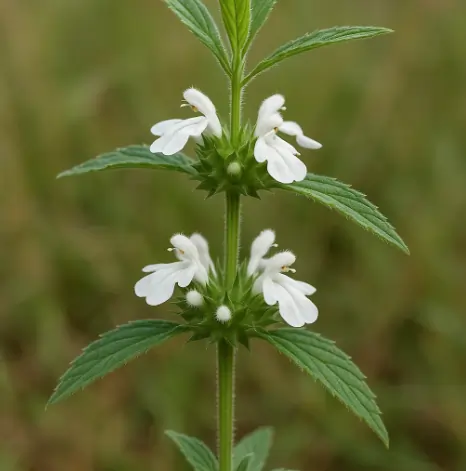
- Botanical Name: Leucas aspera
- Family: Lamiaceae (mint family)
- Common Names: Thumba (Malayalam), Guma (Hindi), Dronapushpi (Sanskrit)
- Description: A small erect herb with opposite leaves, white tubular flowers, and a strong aroma.
- Ayurvedic Properties:
- Rasa (Taste): Tikta (bitter), Katu (pungent)
- Guna (Quality): Laghu (light), Ruksha (dry)
- Virya (Potency): Ushna (hot)
- Dosha Action: Balances Kapha and Vata
How to Prepare & Use Thumba (Leucas aspera) Nasal Drops
Ingredients You’ll Need
- Fresh Leucas aspera (Thumba) leaves – 8 to 10, preferably picked the same day
- Clean, boiled, and cooled drinking water – a few tablespoons (optional, for dilution)
- A fine clean cloth or sterile muslin for filtering
- A small dropper bottle or clean dropper
Step-by-Step Preparation
- Harvest & Wash:
Pick fresh, healthy leaves. Rinse them thoroughly in clean water to remove dust and any insects. - Crush & Extract Juice:
Using a mortar and pestle, crush the leaves into a fine paste. If needed, add 1–2 teaspoons of clean water to help release the juice. - Filter:
Place the crushed leaf paste in a fine muslin cloth and squeeze out the juice into a clean bowl. This ensures no particles remain that could irritate the nose.
How to Apply (Nasya Method)
- Sit in a comfortable position or lie down with your head tilted back.
- Using a clean dropper, put 3 drops of the lukewarm juice into each nostril.
- Take slow, deep breaths and let the juice work through your nasal passages.
- Remain in the position for 2–3 minutes before getting up.
When & How Often to Use
- Best Time: Early evening.
- Frequency: Once daily for 5–7 days during acute sinus or migraine flare-ups, then as needed.
Benefits You May Notice
- Clearer nasal passages within minutes
- Reduced heaviness and pressure in the forehead
- Fewer sinus-induced headaches
- Improved breathing and reduced mucus buildup
Precautions & Safety Notes
- Always use fresh juice; do not store it for the next day.
- Avoid during active cold/flu with fever, nasal bleeding, or pregnancy unless supervised by an Ayurvedic practitioner.
- Not for children under 12 without professional guidance.
- If severe burning, dizziness, or worsening symptoms occur, discontinue immediately.
- This is a supportive therapy, not a substitute for emergency medical care.