

Aging, in Ayurveda, is understood as a natural process influenced significantly by one’s lifestyle, diet, and mental state. Ayurveda emphasizes the balance of the three Doshas i.e Vata, Pitta, and Kapha to maintain vitality, slow aging, and enhance longevity.
Here’s a comprehensive Ayurvedic guide to anti aging, highlighting key herbs, dietary practices, lifestyle adjustments, and rejuvenation therapies.
What Ayurveda Says about Aging?
Ayurveda sees aging (Jarā) primarily as a Vata driven process, characterized by dryness, degeneration, and reduced vitality. Balancing Vata and nourishing bodily tissues (Dhatus), especially Rasā (plasma), Rakta (blood), and Ojas (vital essence), is key to slowing aging.
Ayurvedic Herbs for Anti-Aging (Rasayana)
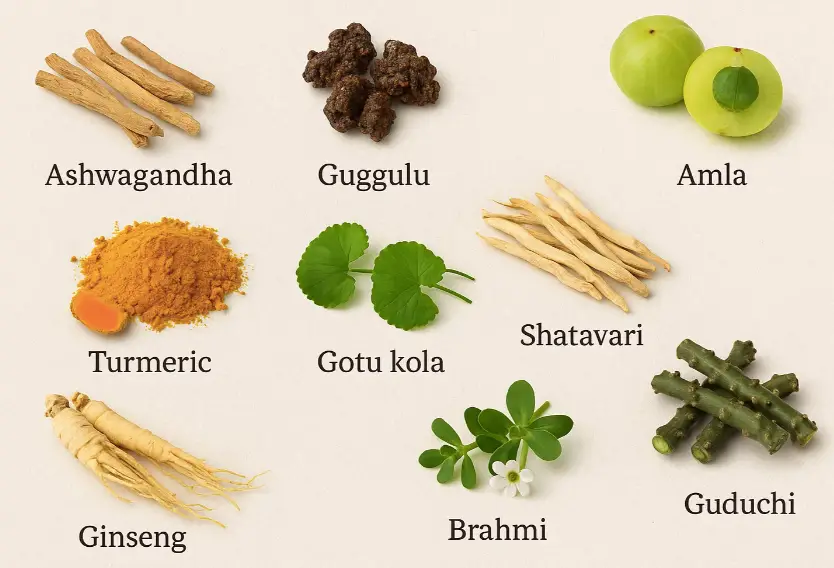
Ayurvedic anti aging herbs (Rasayanas) enhance vitality, support immunity, and delay signs of aging:
| Herb Name (English) | Scientific Name | Benefits |
|---|---|---|
| Ashwagandha | Withania somnifera | Reduces stress, rejuvenates tissues, enhances cognitive function, and prevents cellular aging. |
| Amalaki (Indian Gooseberry) | Emblica officinalis | Rich in vitamin C, powerful antioxidant, improves collagen synthesis, and enhances immune function. |
| Guduchi (Giloy) | Tinospora cordifolia | Enhances immunity, detoxifies the body, promotes healthy skin, and slows cellular aging. |
| Gotu Kola (Brahmi) | Centella asiatica | Supports collagen production, boosts memory, reduces oxidative stress, and improves skin elasticity. |
| Shatavari | Asparagus racemosus | Balances hormones, maintains tissue hydration, reduces inflammation, and enhances vitality. |
| Tulsi (Holy Basil) | Ocimum sanctum | Antioxidant rich, adaptogenic, reduces oxidative stress, and supports cellular health. |
| Haritaki | Terminalia chebula | Potent detoxifier, rejuvenates gut health, supports metabolic functions, and enhances longevity. |
Also Read: Anti-Aging Magic : How Aloe Vera Kept Our Family Youthful
Anti-Aging Dietary Recommendations
Principles:
- Maintain a diet that balances the three doshas, primarily pacifying Vata.
- Favor fresh, cooked, warm, nourishing foods rich in antioxidants, healthy fats, and vital nutrients.
Include:
- Ghee (clarified butter), almonds, walnuts, flaxseeds, sesame oil (healthy fats).
- Seasonal fresh fruits: berries, pomegranate, apples, papaya.
- Green leafy vegetables (spinach, kale), carrots, sweet potatoes, beetroot.
- Whole grains: brown rice, quinoa, oats, barley.
- Legumes and lentils for protein.
- Herbal teas (ginger, tulsi, turmeric).
Avoid:
- Refined sugars, processed foods, excessive salt.
- Cold beverages, stale or excessively preserved foods.
- Alcohol and tobacco, which accelerate aging and oxidation.
Lifestyle Practices for Anti Aging
a. Abhyanga (Self Massage):
Regular warm oil massage improves circulation, nourishes the skin, calms nerves, balances Vata, and prevents dryness.
- Use sesame oil (Vata dominant) or coconut oil (Pitta dominant) daily before bathing.
b. Yoga and Pranayama:
Daily practice improves flexibility, strengthens organs, promotes circulation, reduces stress, and supports mental clarity.
- Beneficial poses: Bhujangasana (Cobra), Sarvangasana (Shoulder Stand), Surya Namaskar (Sun Salutation).
- Recommended Pranayamas: Anuloma-Viloma (Alternate Nostril Breathing), Bhramari (Humming Bee Breath).
c. Adequate Rest and Sleep:
Sleep rejuvenates cells, restores energy, and maintains hormonal balance.
- Aim for 7–8 hours nightly, ideally sleeping before 10 pm.
Ayurvedic Rejuvenation Therapies (Panchakarma)
These treatments detoxify deeply, rejuvenate tissues, and restore vitality.
- Abhyanga and Swedana: Oil massage followed by steam therapy.
- Shirodhara: Gentle pouring of warm herbal oil on the forehead to calm the nervous system and rejuvenate senses.
- Nasya Therapy: Nasal administration of herbal oils to rejuvenate sensory organs and improve cognition.
- Basti (Enema Therapy): Nourishes and detoxifies the colon, balancing Vata and promoting longevity.
Mental and Emotional Well being
Maintaining emotional and mental balance significantly slows aging:
- Daily meditation (15–20 minutes).
- Practicing mindfulness and gratitude.
- Cultivating supportive relationships.
Example of a Daily Routine for Anti Aging (Dinacharya)
| Time | Activity |
|---|---|
| 6:00 am | Wake up, drink warm water with lemon or honey |
| 6:30 am | Yoga & pranayama (20 – 30 min) |
| 7:00 am | Abhyanga (self massage), bath |
| 7:30 am | Light, nourishing breakfast (e.g., oatmeal with fruits, nuts) |
| 12:00 pm | Nutritious balanced lunch (largest meal of the day) |
| 4:00 pm | Herbal tea or fresh fruit snack |
| 7:00 pm | Light dinner (vegetable soup, cooked grains, steamed veggies) |
| 8:30 pm | Relaxation, meditation, self-reflection |
| 10:00 pm | Bedtime |
Ayurvedic Anti Aging Tonics (Practical Recipes)
Example: Amalaki Rasayana
- Ingredients: Amalaki (Emblica officinalis) powder (1 tsp), Honey (1 tsp), Warm water (100 ml)
- Directions: Mix well and consume daily on empty stomach in the morning to support longevity and rejuvenate tissues.
Example: Ashwagandha Milk
- Ingredients: Ashwagandha powder (½ tsp), Milk (250 ml), Cardamom (optional).
- Directions: Boil milk, add Ashwagandha, simmer for 3 minutes, drink warm before bedtime for restful sleep and rejuvenation.
Ayurveda views aging as a holistic phenomenon that can be gracefully managed by adopting balanced dietary habits, rejuvenating herbs, therapeutic practices, and mindful living. Integrating these strategies systematically can significantly delay signs of aging, support vitality, and enhance overall wellbeing.